
Taj Mahal Ticket Price by Visitor Type
The Taj Mahal ticket price isn't a one-ticket-fits-all affair. Your entry fee depends on your nationality: Indian nationals pay the lowest rate, SAARC and BIMSTEC visitors fall into a separate category, and foreign nationals pay the highest. And if stepping inside the iconic marble mausoleum is on your bucket list, you'll need to purchase an additional ticket.
Part of your ticket fee also supports the Agra Development Authority (ADA), helping maintain and preserve one of the world's most iconic monuments for future generations.


Visitor Type | Entry Fee | Mausoleum Charge |
Indian nationals | ₹50 | ₹200 |
SAARC / BIMSTEC nationals | ₹540 | ₹200 |
Foreign nationals | ₹1,100 | ₹200 |
Children under 15 (all nationalities) | Free | Free |
Students hoping for a special discount might be a little disappointed. The official booking portal doesn't offer a separate student rate, so visitors pay the standard ticket price based on their nationality. The good news? Booking online shaves ₹5 off every Indian ticket and ₹50 off every foreign ticket.
If you're lucky with your timing, you might not need a ticket at all. Entry is free for everyone on the days marking Shah Jahan's Urs, observed annually according to the Islamic calendar. Since these dates change every year, it's always worth checking the official website before planning your visit.


Night Viewing at the Taj Mahal Under a Full Moon
If you've only seen the Taj Mahal during the day, you're missing one of its most enchanting experiences. Taj Mahal night viewing is available on just 5 nights each month: the full moon night, along with the 2 nights before and after. However, the experience isn't available on Fridays or during Ramzan, following the same closure pattern as daytime visits.
Each evening, visits take place between 8:00 PM and 11:59 PM, with 8 batches of up to 50 visitors. Every group gets 30 minutes to admire the moonlit monument, making it a far quieter and more intimate experience than a daytime visit.
Indian Adults: ₹510 per person
Foreign Adults: ₹750 per person
Children (3 to 15 Years): ₹500 per child, regardless of nationality
Reporting Time: Arrive 30 minutes early at Shilpgram, near the East Gate, for the security check.
Photography Rules: Only still cameras are permitted. Video cameras and spare batteries are not allowed inside.
When the marble begins reflecting the soft glow of the full moon and the daytime crowds disappear, it's easy to understand why this is considered one of the most magical ways to experience the Taj Mahal.


Taj Mahal Timings and the Friday Closure
Taj Mahal Timings | Details |
Opening time | 30 minutes before sunrise |
Closing time | 30 minutes before sunset |
Ticket counter hours | 1 hour before sunrise to 45 minutes before sunset |
Weekly closure | Every Friday, for general viewing |
The one rule that never changes is the Friday closure, when the monument remains closed to general visitors. On every other day, arriving around the Taj Mahal opening time is the smartest way to beat the midday heat, enjoy softer morning light, and explore before the busiest tour groups arrive.
Booking Taj Mahal Tickets Online Without Getting Scammed
Taj Mahal ticket booking online is available through the official booking portals. Visitors need to choose their visit date, select their nationality, provide a valid government-issued identity proof, and complete the payment process.
If you plan to enter the main marble mausoleum, it's best to add the optional ₹200 mausoleum ticket while booking instead of purchasing it separately later.

Once your booking is confirmed, you'll receive an e-ticket with a QR code, which must be presented along with the same identity proof at the entrance.
When booking online, always use the official Taj Mahal website or its authorised ticketing links. This helps you avoid unofficial or fraudulent booking websites and ensures your ticket is valid before you arrive at the monument.
Entering Through the West, East, or South Gate
The Taj Mahal has 3 named gates, but only 2 currently welcome visitors.
The West Gate is the main entrance, facing Agra city, and has its own ticket counter. The East Gate faces Taj Nature Walk and Fatehabad Town, and is generally the less crowded entrance, making it a good choice if you'd prefer a quieter start to your visit.


The South Gate is currently closed for entry and serves only as an exit for visitors.
Parking Options at Each Gate
West Gate: Park at Amrood Ka Teela, then take a battery bus or golf cart to the entrance.
East Gate: Park at Shilpgram, where battery buses and golf carts are also available. This is also the reporting point for Taj Mahal night viewing.
Inside the Pollution-free Zone: Rickshaws, Guides, and Security
The area surrounding the Taj Mahal is part of a pollution-free zone, so petrol and diesel vehicles aren't allowed within 500 metres of the monument. Instead, battery-operated buses, golf carts, horse-drawn tongas, and e-rickshaws cover the final stretch from the parking areas to the East and West Gates. Once you arrive, you'll pass through a security check before entering the complex.
If you'd like to uncover the stories hidden behind the marble, consider hiring an approved guide displaying an official identity card. They can explain everything from the monument's intricate calligraphy to the symbolism woven into its architecture. Plan to spend around 2 to 3 hours exploring the complex, or a little longer if you're taking a guided tour.


Rules and Prohibited Items at the Taj Mahal, Agra
The security check at the Taj Mahal, Agra, is more thorough than many first-time visitors expect, so packing smart can save you time at the entrance. You can carry essentials like a water bottle, your mobile phone, and a small still camera, while everything else is best left behind.
Here's what you should know before you arrive:
Prohibited Items: Arms, ammunition, tobacco products, food (including toffees), headphones, knives, tripods, mobile chargers, wires, liquor, and most electronic items other than a camera are not allowed inside.
Drones: Drone cameras are strictly prohibited in and around the Taj Mahal, with no exceptions for visitors.
Photography: Photography is permitted throughout the complex, but it is strictly prohibited inside the main mausoleum chamber.
Shoe Covers: Shoe covers are provided free before you step onto the marble platform surrounding the mausoleum and must be worn to help protect the marble surface.
Cloakrooms: Cloakrooms are available near both the East and West Gates for storing prohibited items and small belongings before entering the monument.
Identification: Carry the same valid government-issued photo ID used during online ticket booking, as it may be checked along with your e-ticket at the entrance.


The Best Time of Day and Season to Visit
There's no bad time to see the Taj Mahal, but there are definitely smarter times.
Arrive at sunrise, and you'll catch the marble glowing with delicate shades of pink and gold before the day's heat and crowds begin to take over. It's also when photographers are at their happiest, and for good reason.
If you're planning your trip months in advance, aim for October to March.
The cooler weather and clearer skies make exploring the monument far more comfortable than during the scorching summer months. Just remember one golden rule: the Taj Mahal is closed every Friday, and weekends are usually much busier than weekdays. A weekday morning visit gives you the best chance to experience this wonder at its most peaceful.
For a month-by-month breakdown of weather, crowds, and seasonal highlights, read our Best Time to Visit the Taj Mahal guide.


A Brief Look Back Before You Step Inside
Before you wander through the gardens and marble halls, it's worth knowing the story that brought them to life. The Taj Mahal wasn't built to become one of the world's most famous landmarks. It began as Emperor Shah Jahan's tribute to his beloved wife, Mumtaz Mahal, after her death in 1631. Construction began in 1632 and continued until 1653, creating the masterpiece that continues to captivate visitors centuries later.
Today, the Taj Mahal is recognised as a UNESCO World Heritage Site and one of the New Seven Wonders of the World. While millions visit for its beauty, its enduring legacy lies in the remarkable blend of history, architecture, and craftsmanship that has made it an enduring icon of India.
What to See Inside the Taj Mahal, Agra
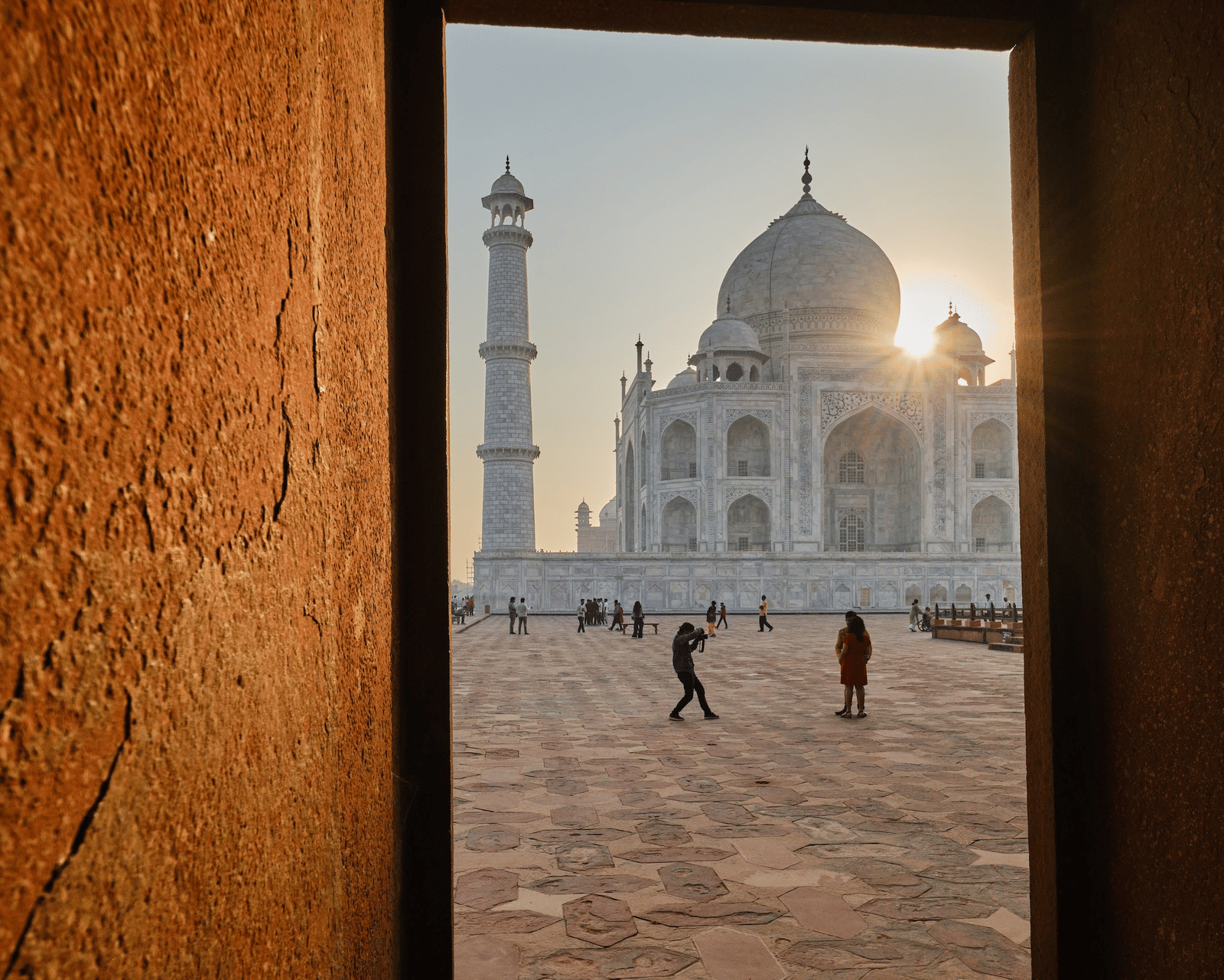
The Great Gate (Darwaza-i-Rauza): Step through this magnificent red sandstone gateway and the Taj Mahal reveals itself like a perfectly framed masterpiece, making it one of the monument's most iconic first impressions.
The Charbagh Gardens: These perfectly symmetrical Persian-style gardens, divided into 4 sections by pathways and water channels, create the postcard-perfect approach to the mausoleum.
The Main Mausoleum: The gleaming white marble mausoleum houses the ornamental cenotaphs of Mumtaz Mahal and Shah Jahan, showcasing exquisite marble inlay, intricate calligraphy, and delicate lattice screens.


The Mosque and the Jawab (Guest House): Flanking the mausoleum, these matching red sandstone buildings create perfect symmetry, with the western mosque still serving as an active place of worship.
The 4 Minarets: Standing at each corner of the marble platform, the elegant minarets frame the monument and were designed with a slight outward lean to help protect the mausoleum in the unlikely event of an earthquake.
The Yamuna River View: Walk behind the mausoleum for peaceful views across the Yamuna River, a quieter perspective that many visitors overlook.
Where to Stay near the Taj Mahal, Agra
Some experiences deserve more than a hurried visit. Watching the Taj Mahal emerge in the soft glow of dawn is one of them, and staying just moments away means you never have to rush the moment.
That's where Hotel Clarks Shiraz, Agra, comes in. Located just 3 km from the monument, we help you experience one of the world's greatest masterpieces at an unhurried pace. Our Taj View Deluxe Room offers uninterrupted views of the iconic dome, allowing the monument to become part of your stay rather than simply another stop on your itinerary. Designed to accommodate up to 3 adults and 2 children, it pairs timeless comfort with one of Agra's most coveted outlooks.


Our other room categories offer equally tranquil views of beautifully landscaped gardens or the shimmering pool.
For more than 5 decades, we have welcomed travellers seeking a stay that is every bit as memorable as the destination itself. Begin your day with exceptional dining, unwind with indulgent therapies at our luxurious spa, and return each evening to elegant spaces crafted for comfort and quiet sophistication.
Whether you're visiting for a romantic escape, a family holiday, or a special celebration, every moment at our 5-star hotel in Agra is thoughtfully designed to complement the timeless grandeur of the Taj Mahal.
From the Station to the Monument: Getting to the Taj Mahal
Reaching the Taj Mahal is surprisingly straightforward. The only challenge is deciding whether you'll spend more time admiring the monument or taking photos of it.
From Agra Cantt Railway Station: The Taj Mahal is approximately 7 km away, about a 16-minute drive via The Mall Road, with taxis, auto-rickshaws, and app-based cabs readily available outside the station.


From Hotel Clarks Shiraz, Agra: Staying with us means you're only 3 km from the Taj Mahal, making sunrise visits and evening returns equally effortless.
From Delhi: Travelling from the capital? The Taj Mahal is approximately 210 km away via the Yamuna Expressway, with the journey taking around 3 hours 30 minutes by car. For a detailed guide covering road, rail, and air travel, explore our How to Reach Agra from Delhi blog.
Once you arrive, remember that the Taj Mahal sits within a pollution-controlled zone, so petrol and diesel vehicles aren't permitted near the monument. Designated parking areas are available near the East Gate (Shilpgram) and West Gate (Amrood Ka Teela), with battery-operated buses, e-rickshaws, golf carts, and horse-drawn tongas covering the final stretch to the entrance. It's a small detour that helps preserve one of the world's greatest masterpieces for generations to come.